The 2026 World Cup Happens Outside the Stadium Walls
Insights
| 11 Jun 2026
The 2026 NAR data confirms what experienced agents already know: neighborhood fit drives the decision. The brokerages pulling ahead are the ones that have made that intelligence accessible at every stage of the buyer journey.
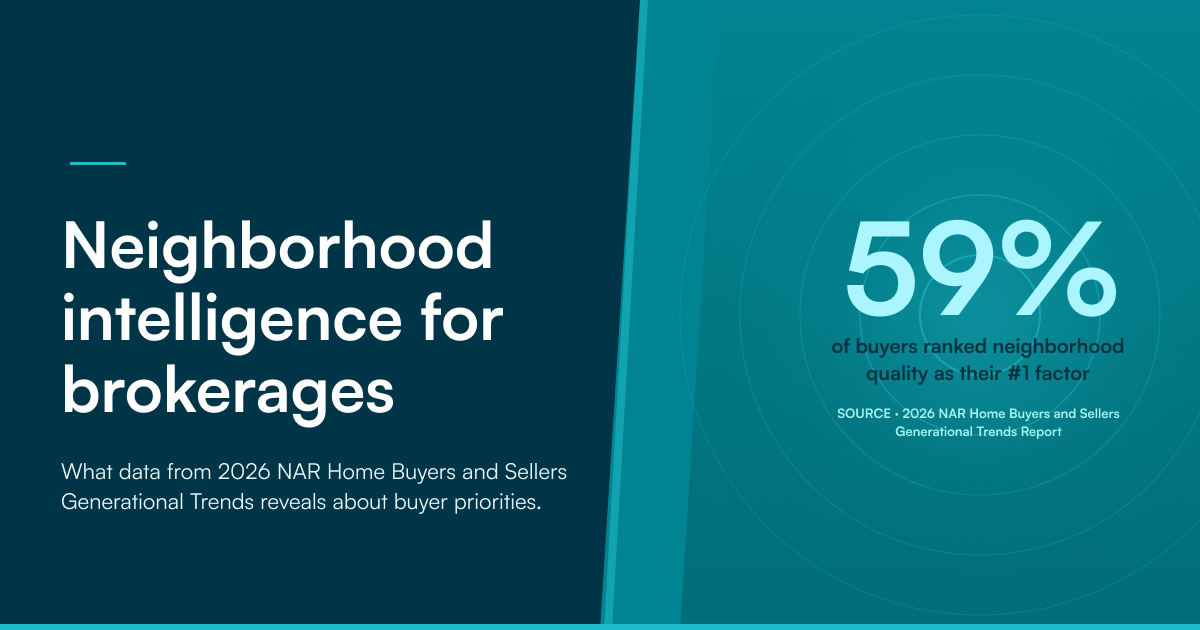
The 2026 NAR Home Buyers and Sellers Generational Trends Report offers a clear view of what’s driving purchase decisions across every generation of buyer active in this market. One finding runs through the data consistently: 59% of all buyers cited quality of the neighborhood as a top factor in where they chose to buy. Ahead of price. Ahead of square footage. Ahead of any specific property feature. The neighborhood is the primary variable, which puts the brokerage’s ability to explain, contextualize, and compare neighborhoods at the center of the value it provides.
The buyer profile amplifies this.
These buyers have done their research. They arrive at a showing with real location questions, and they expect knowledgeable answers.
And it is in that expectation for answers that are specific, location-focused, and informed by digital research that the opportunity for brokerages is clearest. The buyers active in this market reward the agent and the platform that can provide them with in-depth, meaningful insights that helps them make more confident, better informed decisions. Local Logic’s location intelligence is what makes that depth possible at scale, for both the agent in the field and the consumer on the website.
of buyers cited neighborhood quality as a top factor in their purchase decision, which is more than any other single variable
of buyers purchased through a real estate agent, meaning that the agent channel remains strong and consistent across every generation
of buyers said their agent improved their knowledge of the neighborhoods and areas they were searching, which is a service buyers value highly
of buyers said finding the right property was the most difficult step, not inventory volume, but neighborhood fit
The six buyer cohorts active in today’s market have substantially different location priorities, and the agents and platforms that understand those differences are better positioned to match buyers to properties that actually fit.
The 2026 report makes clear that the buyer population is not converging toward a common set of preferences. Baby Boomers account for 42% of all recent purchases with priorities centered almost entirely on proximity and community. Younger Millennials, at 11% of the market, are balancing student debt, commute costs, and first-home affordability in ways that require a very different kind of location intelligence. Serving this market well means understanding what each cohort is weighing and having the data to speak to it
88% of buyers purchased through an agent, and 40% said their agent improved their understanding of the neighborhoods they were searching. That combination points directly to what buyers value most from professional representation in this market.
According to the 2026 NAR Generational Trends Report, 46% of buyers started their home search by looking online for properties, and 52% ultimately found the home they purchased through an online channel.
Buyers arrive at the agent relationship having already done substantial research, which changes what they need from that relationship. They’re not looking for a listing introduction. They’re looking for someone who can answer the specific location questions that digital search hasn’t resolved: whether a commute is genuinely manageable, what the school district is like in practice, how a neighborhood is likely to change over time. 40% of buyers said their agent improved their knowledge of the areas they were searching, which is one of the highest-value services the data shows agents providing.
The brokerage that equips its agents with richer, more current, more structured location intelligence is directly investing in that service capability. The conversation becomes more informed, the advice more credible, and the relationship easier to build quickly. 92% of Younger Millennial buyers expressed satisfaction with their agent’s knowledge of the purchasing process, which is a benchmark worth taking seriously when deciding what tools agents have access to.
34% of all buyers rated neighborhood information as “very useful” on real estate websites, which is one of the highest-rated content types in the entire report. Brokerage platforms that surface this context alongside listings are meeting buyers at a moment of genuine interest, not pushing information they didn’t ask for.
Local Logic aggregates over 100 billion data points across more than 250 million addresses, producing 250+ normalized insights per address, from walkability and school proximity to commute times, demographics, and climate risk, for both agent-facing tools and consumer-facing platforms.
What makes that depth useful in practice is the normalization across geographies. A walkability score or school proximity rating in one market reflects the same underlying methodology as the same data point in another.
For buyers comparing neighborhoods across market areas, which the 2026 NAR data shows many are doing (particularly Boomers moving a median of 45 miles), that consistency matters. Local Logic’s data reaches more than 22 million monthly users across partner platforms and powers more than 8,000 real estate websites, which provides a meaningful benchmark for what integration at brokerage scale looks like in practice.
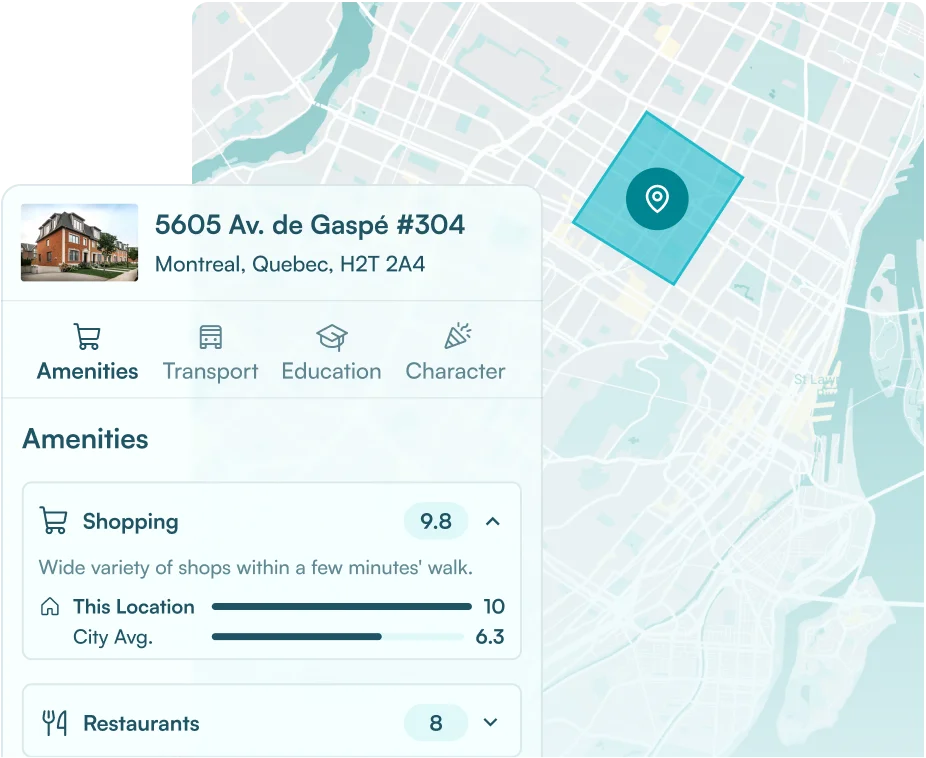
For agents, Neighborhood Reports puts this data layer directly into the workflow, giving agents access to unlimited, shareable location reports for any address. When 40% of buyers said their agent improved their neighborhood knowledge, the agents delivering on that expectation most consistently are the ones with structured, current, shareable intelligence available on demand, not just general familiarity developed over time.
On the consumer side, Local Content and NeighborhoodWrap surface that same intelligence on listing and community pages when home consumers are actively evaluating a property. Brokerages including Baird & Warner, Seven Gables Real Estate, and Royal LePage have integrated these tools into their platforms, embedding the neighborhood context buyers indicated they value directly alongside listing details. As for Neighborhood Reports, they provide buyers with a full picture of what life at a specific address looks like, whic is the kind of substantive, address-level information that supports a confident decision rather than requiring a follow-up conversation to obtain.
The underlying data powering each of these products comes from the same normalized, proprietary asset, which matters more as AI-assisted search becomes standard. Brokerages and platforms built on public data or shallow analytics are increasingly exposed as AI models get better at synthesizing generic information. Local Logic’s position is the opposite: a differentiated data layer that AI multiplies rather than replicates.

Today’s homebuyers are incredibly informed and have high expectations from their agents. Our suite of home consumer engagement solutions is our response to this challenge. They are powered by over 100 billion data points across more than 250 million addresses, producing 250+ normalized insights per address.
CEO & Co-Founder, Local Logic
The 2026 NAR data describes a buyer population that is experienced, specific in its expectations, and already doing most of its early research online. The brokerages best positioned in this environment are those whose agents and platforms can answer the location questions that research raises with accuracy and without friction.
The consistent thread across every cohort in the 2026 report is that buyers enter the market knowing what kind of neighborhood they want.
What they’re looking for, at every stage of the process, is a source that can give them reliable, address-level answers to those questions. 56% named finding the right property as the hardest step, not because properties weren’t available, but because the information required to evaluate neighborhood fit wasn’t.
Brokerages like Baird & Warner, Seven Gables Real Estate, and Royal LePage have invested in closing that gap by recognizing that location intelligence isn’t a supplementary capability but a core part of the service they offer. The 2026 NAR data makes the case for that investment clearly. Buyers have named their priorities with specificity, and the brokerages that can meet those priorities with data-backed, agent-delivered insights are in a strong position to earn the confidence of every cohort in the market.
Discover how you can leverage location intelligence for your brokerage
Whether you’re looking to equip your agents with richer neighborhood intelligence or upgrade the location experience on your consumer platform, the right starting point is a conversation about your specific context.