Local Logic and Elm Street Bring Neighborhood Insights to IDX Broker Agent Websites
Partnerships
| 06 Oct 2026
The best real estate marketing tools for agents in 2026 are not a single platform; they’re a stack.
Which combination is right depends on your volume, your brokerage infrastructure, and where buyers are dropping off in your funnel.
Ask most real estate agents what their marketing stack looks like, and you will get a fragmented answer. A Canva account. A CRM they don’t fully use. An IDX website they set up two years ago and haven’t touched since. Maybe a social scheduling tool. Possibly a listing flyer template from the brokerage.
The problem is not a shortage of tools. The real estate technology market has never offered more options for agent marketing. The problem is coherence: understanding which tools handle which part of the buyer journey, how they connect, and which gaps are quietly costing agents leads, engagement, and closed transactions.
This guide is built around that coherence problem. Rather than ranking six platforms against each other, which would be misleading since they operate in different parts of the funnel, we’ve mapped each tool to the stage of the agent marketing process it addresses best. The result is a practical framework for agents, team leaders, and brokerages evaluating where to invest and why.
Before evaluating any individual tool, it helps to have a clear map of the stages a buyer moves through and to understand which part of that journey each type of tool is built to serve.
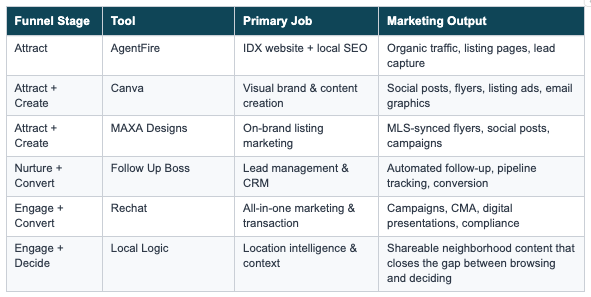
With that framework in mind, here is a detailed evaluation of each tool across the six criteria that matter most to real estate marketing buyers.
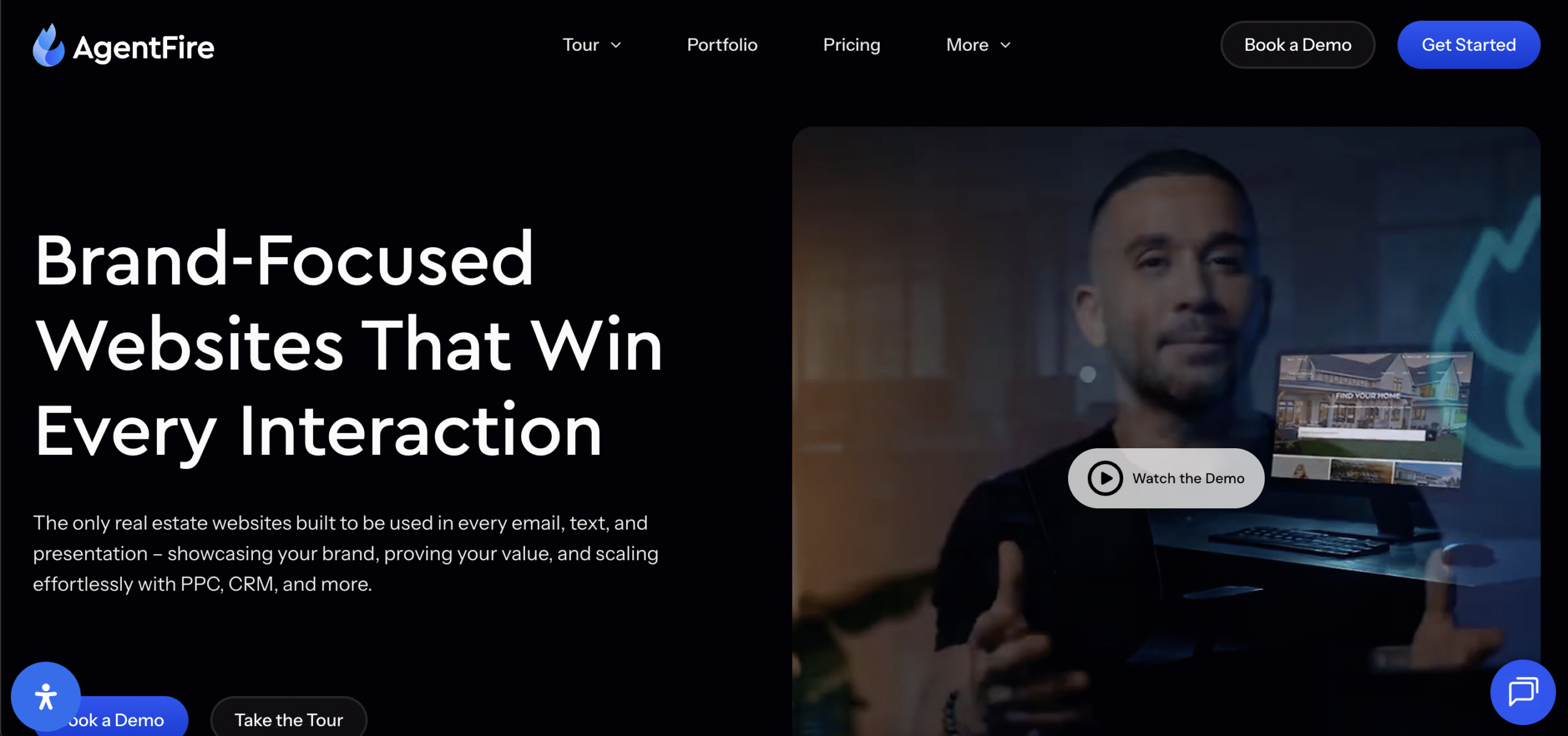
AgentFire builds IDX-enabled real estate websites for agents and teams with a deliberate emphasis on hyperlocal content, such as neighborhood pages, community guides, market reports, and local lifestyle content, designed to rank in organic search and capture leads before buyers have committed to an agent relationship.
Funnel stage: Attract
Key strengths: AgentFire’s platform is built on the premise that the best long-term lead source for an agent is not paid social media: it’s Google. The company helps agents build neighborhood-level content ecosystems that show up when buyers search for area-specific information, such as chool districts, commute times, local businesses, and community events. When that content is well-executed, it creates a persistent organic lead channel that paid media cannot replicate. The IDX search experience is solid, and the platform integrates with major CRMs for lead routing.
Best for: Agents and small teams who treat their website as a long-term business asset, not just a digital business card. Particularly strong for agents who want to own a neighborhood or community niche online.
Why it stands out: In a market where most agent websites are indistinguishable templates, AgentFire’s hyperlocal content architecture creates a genuine competitive moat. An agent with 50 well-written neighborhood pages ranking in Google owns something no ad budget can easily replicate.
Canva is a browser-based graphic design platform that enables agents, regardless of design experience, to produce professional-looking marketing materials, including social media posts, listing flyers, email headers, open house signs, market report visuals, and more. Canva for Teams allows brokerages to create brand kits that agents can apply to templates, ensuring visual consistency across the office.
Funnel stage: Attract + Create
Key strengths: Canva’s core value proposition is speed and accessibility. An agent can create a polished listing announcement post, a story for Instagram, and a PDF market report in the time it would take a graphic designer to open a brief. The template library is extensive, the learning curve is minimal, and the output quality is consistently above what most agents could produce with any other tool at this price point. Canva for Teams adds a layer of brand governance that brokerages find particularly useful for maintaining consistency at scale.
Best for: Every agent who creates visual content, which, in 2026, is every agent. Canva is not a niche tool; it is table stakes for anyone producing listing marketing, social content, or client-facing materials. Brokerages that roll out a branded Canva for Teams account give their agents a meaningful operational advantage.
Why it stands out: Few tools have had as much impact on agent marketing quality as Canva. Before it existed, professional-looking listing materials required either a designer or a premium brokerage service. Now, any agent with a Canva account can produce materials that compete visually with top-performing teams.
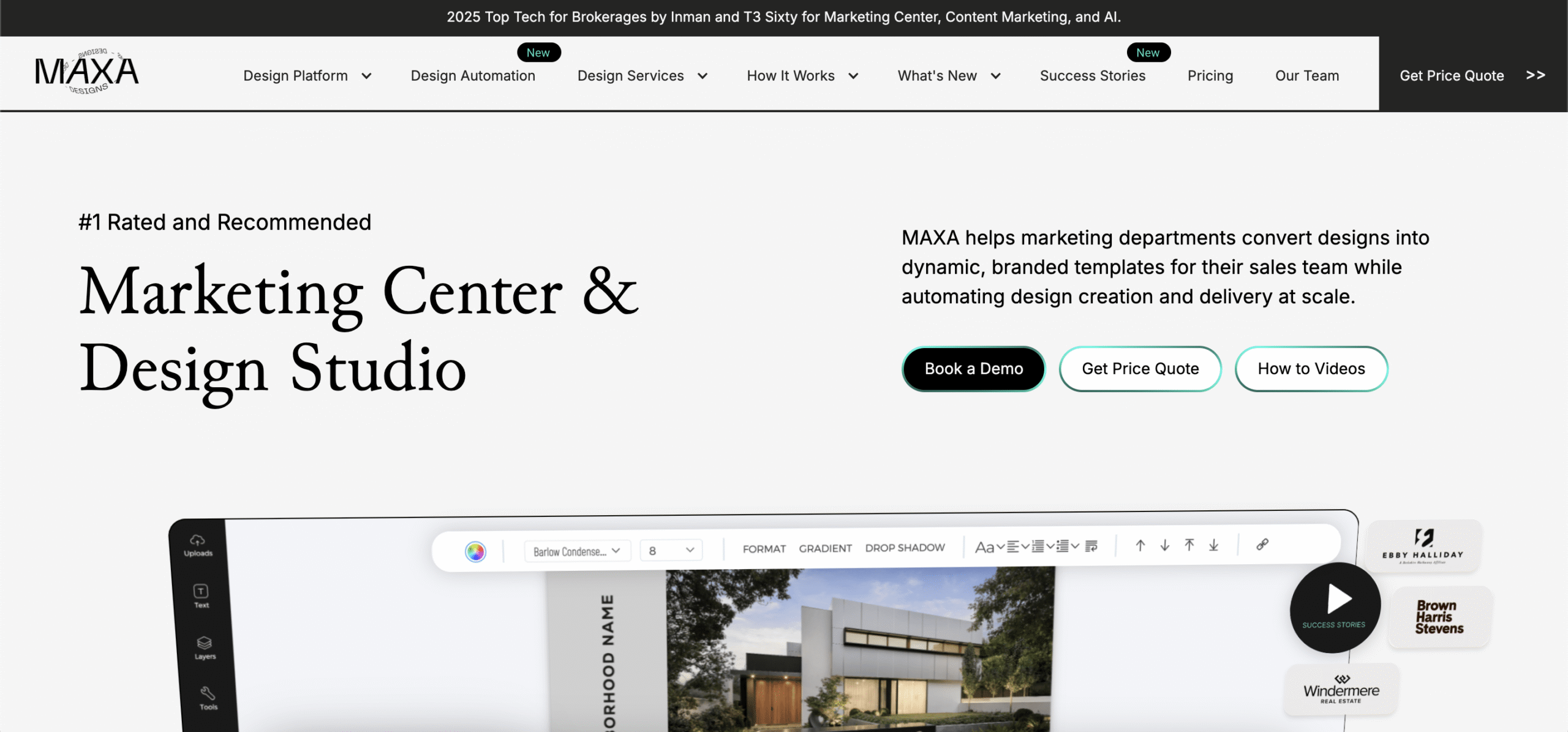
MAXA Designs is a real estate marketing automation platform that connects directly to MLS data to automatically generate listing marketing materials (e.g., social media posts, flyers, digital ads, email campaigns, and property websites) using brokerage-approved brand templates. When an agent lists a property, MAXA can trigger the automatic creation of a full suite of branded marketing assets without requiring the agent to design anything.
Funnel stage: Attract + Create (automated)
Key strengths: The defining differentiator for MAXA Designs is MLS integration with brand governance. Rather than asking agents to manually create marketing materials (which many agents do inconsistently or not at all), MAXA automates that production from the moment a listing goes live. For brokerages managing dozens or hundreds of agents, this solves two persistent problems simultaneously: 1. Marketing quality drops off when agents don’t produce materials, and 2. Brand consistency erodes when they do it themselves. MAXA addresses both by removing the manual step.
Best for: Brokerages and franchise networks that want consistent, branded listing marketing across their agent roster without depending on individual agent effort or design skills. Particularly valuable for high-volume brokerages where marketing compliance and brand standards are a priority.
Why it stands out: Automated listing marketing that actually maintains brand standards is harder to execute than it sounds. MAXA Designs has built the MLS data integration and template architecture to make it work reliably at scale, which most generic design tools and DIY approaches cannot match.
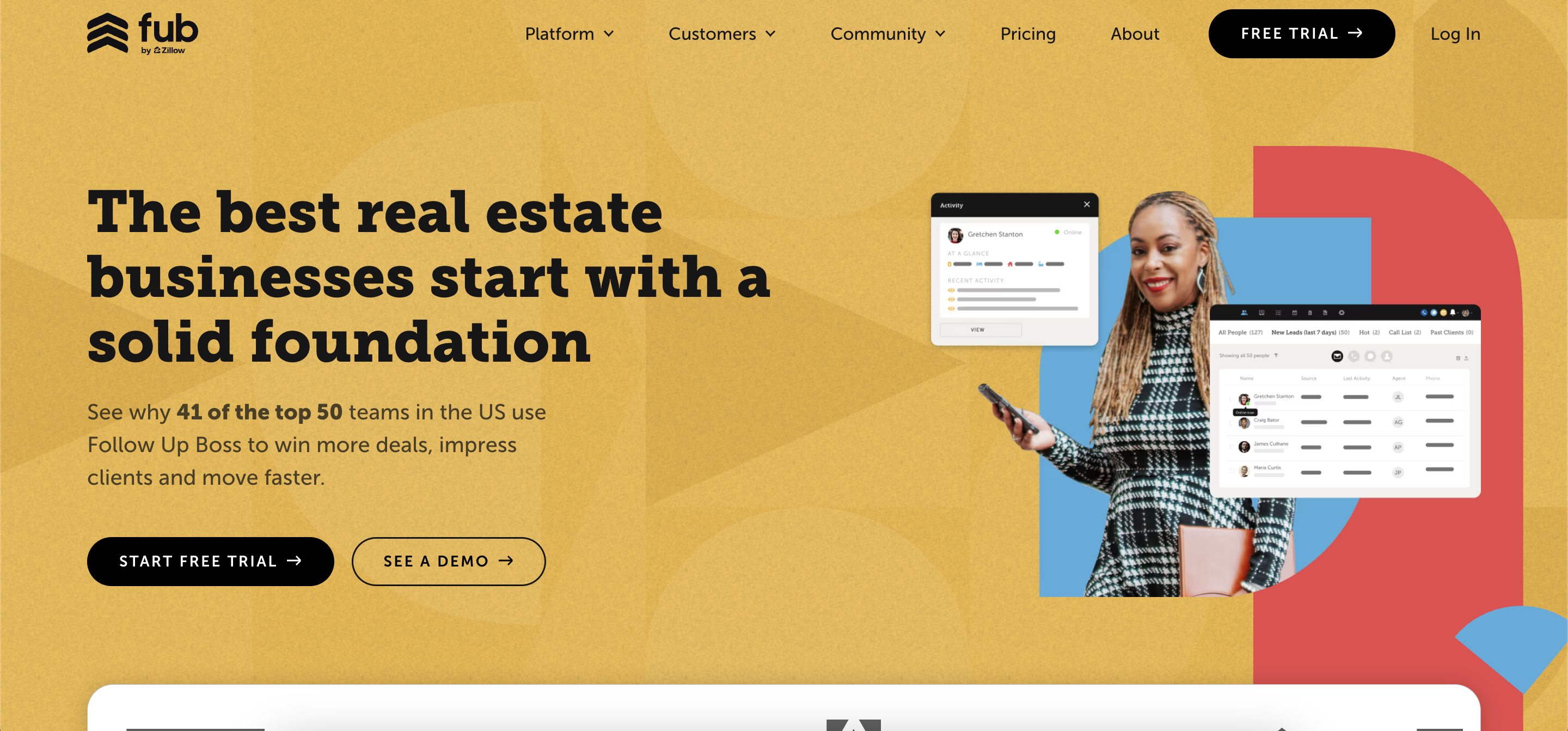
Follow Up Boss is a real estate CRM and lead management platform built specifically for the volume and workflow patterns of real estate teams and brokerages. It aggregates leads from multiple sources, including portals, websites, paid ads, and referrals, into a single pipeline, then enables agents to manage follow-up sequences, automate communications, track engagement, and prioritize active prospects.
Funnel stage: Nurture + Convert
Key strengths: The real estate CRM market is crowded, but Follow Up Boss has earned a strong reputation among high-volume teams for two reasons: its breadth of lead source integrations and its reliability as a daily workflow tool. It connects natively with Zillow, Realtor.com, Facebook Lead Ads, IDX websites, and dozens of other lead sources, routing inbound leads to the right agent instantly. The follow-up sequencing tools (e.g., text, email, and task reminders) are well-designed for the way real estate agents actually work, which is not the same as how most generic CRMs assume they work.
Best for: Real estate teams and brokerages handling significant lead volume from multiple sources, where the operational challenge is speed-to-contact and consistent follow-up rather than finding more leads. Also an excellent fit for team leaders who want visibility into agent activity and pipeline health.
Why it stands out: The integration ecosystem is genuinely best-in-class. When a lead from any channel hits the pipeline, Follow Up Boss routes, assigns, and initiates follow-up faster and more reliably than most alternatives. For teams where speed-to-contact is the primary conversion variable, that reliability has measurable financial value.
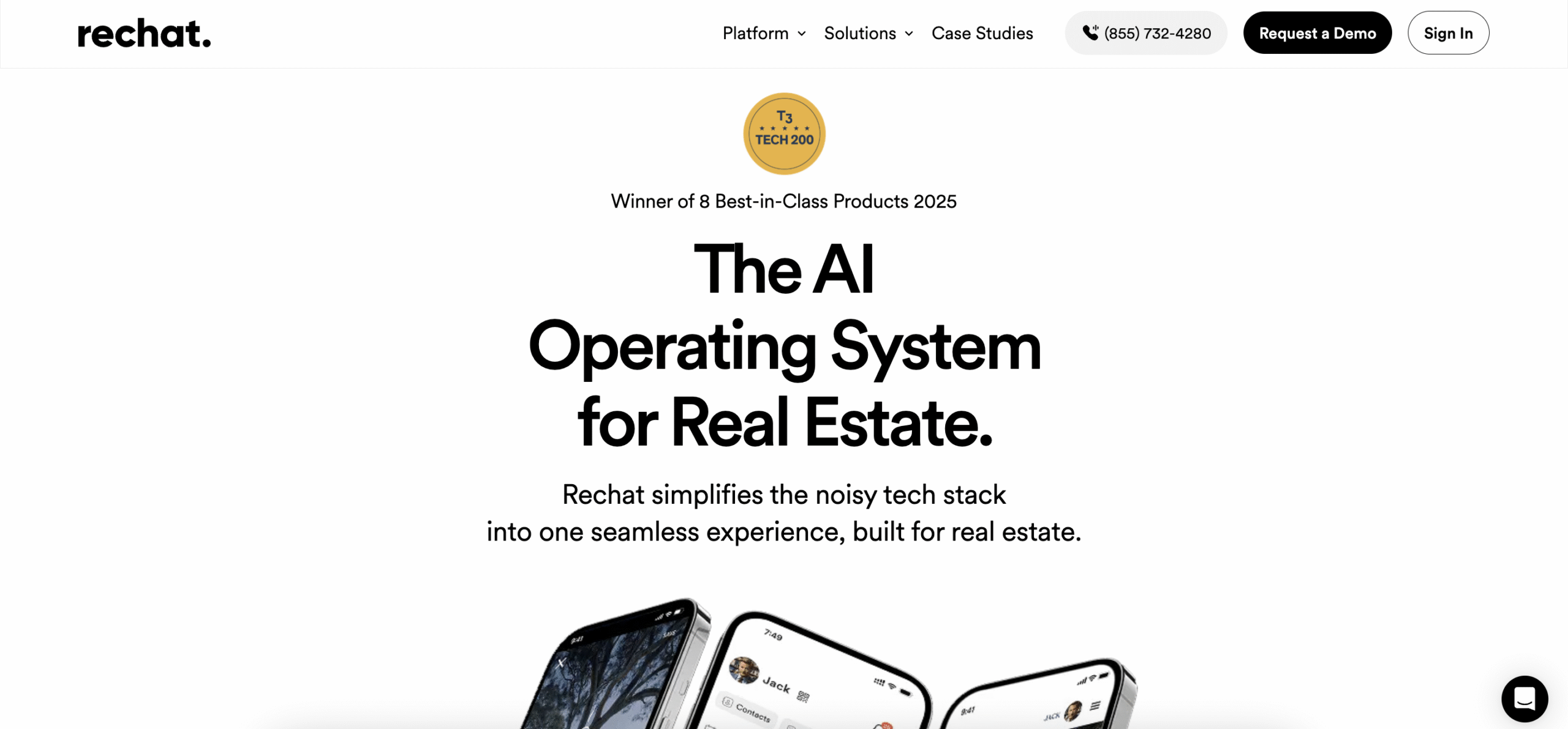
Rechat is an enterprise real estate platform that integrates marketing tools, CRM functionality, CMA and listing presentation capabilities, transaction management, and compliance workflows into a single brokerage-level system. Rather than assembling separate tools for marketing, deal management, and compliance, Rechat argues that brokerages are better served by a platform where all of those functions share the same data and the same interface.
Funnel stage: Nurture + Convert + Transact
Key strengths: The value proposition of Rechat is consolidation. Brokerages running separate platforms for marketing, CRM, CMA, and transaction management often experience data fragmentation, agent confusion, and administrative overhead. Rechat’s integrated approach reduces the number of systems agents need to navigate while giving brokerage administrators more visibility across the operation. The marketing tools, including email, social, listing presentations, and digital CMAs, are well-developed and designed for agents who are not marketing specialists.
Best for: Mid-to-large brokerages that want to reduce their technology vendor footprint and give agents a single platform that covers marketing, pipeline management, and transaction workflow. Particularly valuable for brokerages that have struggled with adoption across fragmented tool sets.
Why it stands out: The combination of CMA capability, listing presentation tools, marketing automation, and transaction management in a single platform is rare. For brokerages that have made that consolidation trade-off and found it works for their culture, Rechat delivers material operational efficiency.
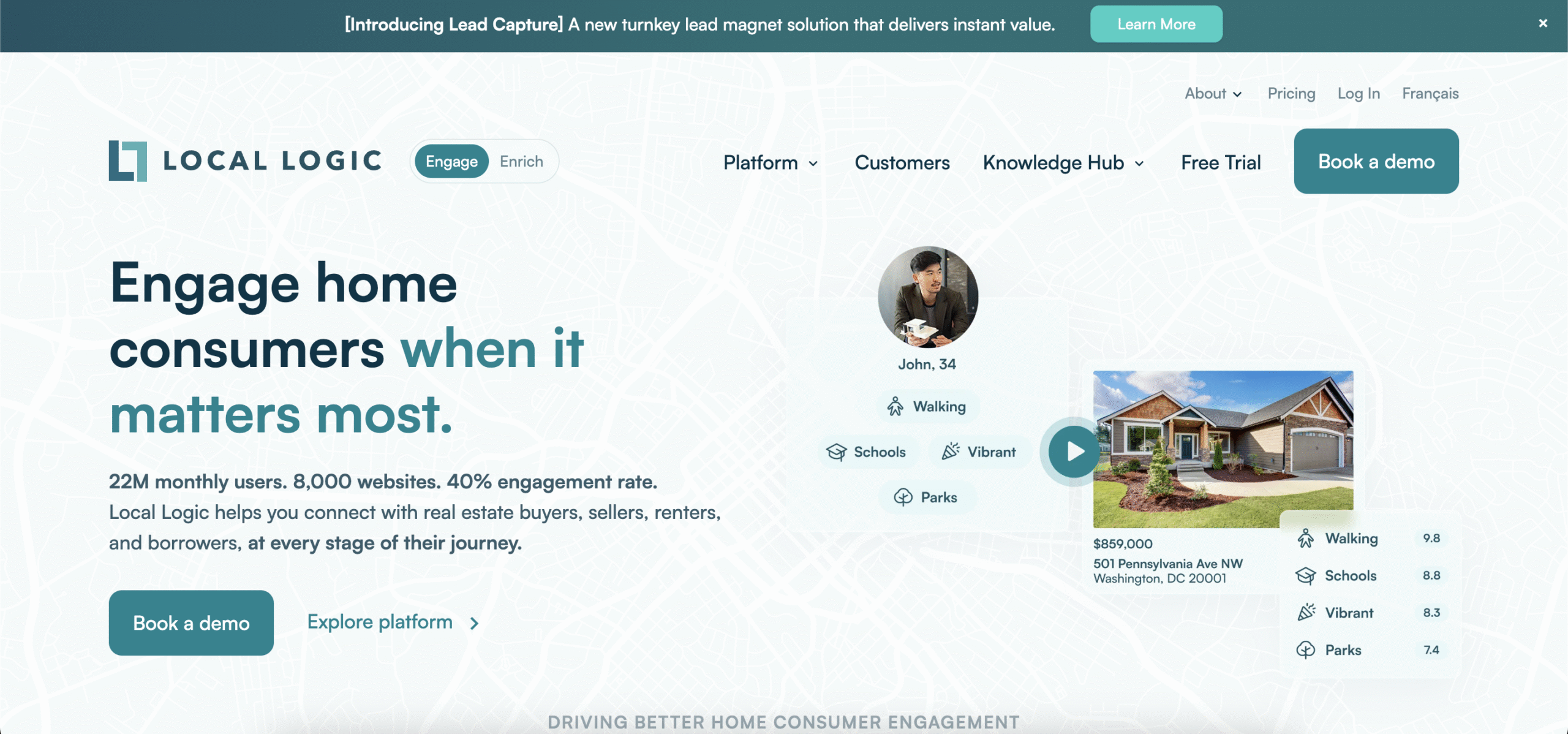
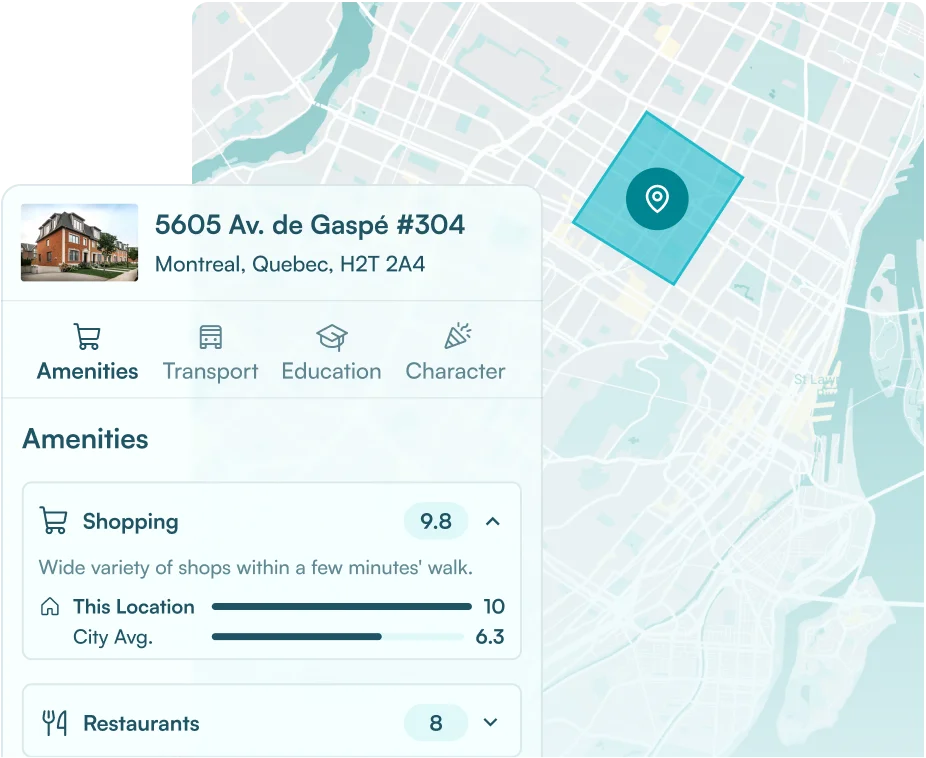
Local Logic is a home consumer engagement platform that provides structured lifestyle & market data (e.g., walkability, transit access, noise levels, nearby amenities, school proximity, lifestyle scores, commute times, and community character) that can be embedded into listing pages, consumer-facing marketing content, IDX search experiences, and brokerage platforms. It adds the context that buyers need to move from browsing a listing to deciding on a place.
Funnel stage: Engage + Decide (the layer most agent marketing tools miss)
Key strengths: Local Logic’s neighborhood data covers thousands of communities across North America and is structured for embedding into digital platforms via both APIs and SDKs. For agents who write neighborhood-focused listing descriptions, market neighborhood guides, or work with relocation buyers, this data provides a level of specificity and credibility that manually assembled content cannot replicate. For brokerages and portals operating at scale, the API integration can enrich every listing page with contextual data that reduces buyer uncertainty, which is one of the primary reasons leads go cold.
From a marketing standpoint, Local Logic also powers a content strategy that goes beyond the property. An agent who can publish richly detailed neighborhood guides by incorporating commute data, school ratings, walkability scores, and local amenity profiles creates a distinctly different content asset than one who writes generic ‘Why I Love This Neighborhood’ blog posts. That content ranks better in search, engages buyers longer, and positions the agent as a credible local expert rather than a listing publisher.
That engagement extends beyond digital content. Local Logic’s Location Reports give buyers a shareable, print-ready summary of neighborhood lifestyle and market data for any address. These reports are practical tools that bridge the gap between online search and real-world conversations with an agent. For agents working relocation buyers or serving clients who need to evaluate unfamiliar neighborhoods, it’s a natural reason to reach out and a credible leave-behind that reinforces the agent’s local expertise long after the first conversation.
Best for: MLSs, real estate portals, and brokerage platforms that want to enrich search and listing experiences at scale. Individual agents or teams that market heavily around neighborhood and community context. Relocation-focused teams serving buyers unfamiliar with the local market. Brokerages that want to differentiate their buyer engagement experience beyond listing photos and price history.
Why it stands out: Most real estate marketing tools help agents talk about properties. Local Logic equips agents with the knowledge they need to help consumers understand places. That distinction matters because property information is a commodity. Neighborhood and lifestyle intelligence is not. Buyers who feel genuinely informed about where a home sits are more likely to request a showing, submit an offer, and close because their confidence is based on understanding and not just aesthetics.
Use the table below to match each platform to your current needs and existing stack.
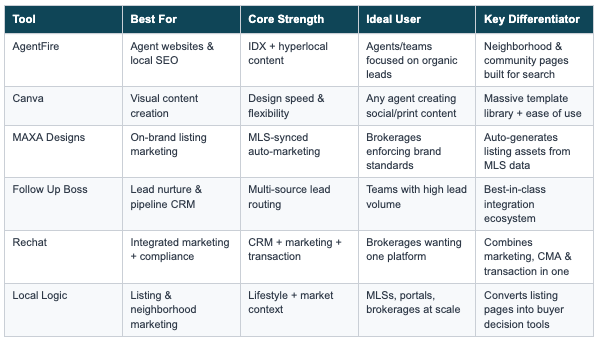
Before investing in any new tool, identify where buyers (or leads) are dropping off.
Enterprise brokerage platforms like Rechat or MAXA Designs are built for operations managing significant agent rosters. They require rollout investment and administrator capacity to deliver their value. Agents or small teams with simpler needs will get more return from lightweight, high-adoption tools like Canva and a well-configured CRM. Avoid over-engineering a stack for where you are today; build toward where you intend to be in 18 months.
The most durable marketing assets in real estate are not social posts; they are indexed, searchable content that attracts buyers before they have a brand relationship. Neighborhood guides enriched with walkability data, school information, and lifestyle context rank in Google for years. Social posts disappear in 48 hours. A balanced stack includes both, but the investment in compounding content, such as those built on platforms like AgentFire and enriched with data from Local Logic, tends to generate the highest lifetime return.
The most neglected stage of the agent marketing funnel is not lead generation; it is buyer confidence at the listing consideration stage. Buyers who are browsing properties but haven’t requested a showing are not necessarily unconvinced by the home. Often, they are uncertain about the place. Platforms and content strategies that address that uncertainty, through neighborhood intelligence, commute data, and lifestyle context, convert listing views into showing requests at meaningfully higher rates than those that rely on photos and price alone.
Real estate has historically been an industry where marketing quality varied enormously from agent to agent. That variance was accepted as a function of individual talent and effort. That is changing, and it is changing in ways that favor agents and brokerages who approach marketing as a system rather than a set of individual activities. Three forces are driving this shift.
Today’s buyer does more research before contacting an agent than any previous generation, and they arrive at that first conversation with clear expectations about neighborhood, commute, and lifestyle. Marketing that doesn’t address those questions early in the funnel loses buyers before they ever raise their hand.
Google AI Overviews, Perplexity, and ChatGPT are increasingly surfacing neighborhood and community information in response to home-search queries. Marketing strategies that incorporate rich, accurate, structured local data beyond just listing details are better positioned to appear in those summaries.
With tools like Canva and automated platforms like MAXA Designs, agents whose marketing stands out are no longer competing on production quality. They are competing on depth, specificity, and the quality of information they provide buyers at each stage of the decision process. That is a competition that neighborhood intelligence, strong CRM follow-up, and contextually rich content can win.
The agents and brokerages that win on marketing in 2026 will not be those who found the single best tool. They will be those who built the most coherent stack. Top of funnel covered by a content-rich IDX website. Listing marketing handled automatically and on-brand. Leads routed and nurtured systematically. And at the listing consideration stage, a buyer experience rich enough in neighborhood context that the leap from browsing to deciding doesn’t require a phone call to get unstuck.
Each tool in this guide plays a specific role in that system. The gaps between them are where leads go cold, where brand consistency breaks down, and where buyers quietly lose confidence and walk away. Closing those gaps, not just adding more tools, is the real marketing challenge facing agents and brokerages right now.
For a solo agent starting to build a marketing infrastructure, a strong IDX website and a reliable CRM are the foundation. AgentFire addresses the website and SEO layer. Follow Up Boss handles lead management. Canva covers content creation at a low cost. These three tools together address the core funnel from attraction through nurture. Location intelligence tools like Local Logic add the most value when an agent is producing neighborhood-focused content or when their brokerage has the technical capacity for platform integration.
Conversion in real estate is primarily a confidence problem, not an information volume problem. Buyers have access to more listings than ever. What converts a lead into an appointment is the buyer’s confidence that they understand the property, the neighborhood, and how the location fits their life. Tools that shorten that path to confidence, whether through efficient follow-up sequences (Follow Up Boss), compelling listing presentations (Rechat), or location intelligence that answers the ‘what’s it like to live here’ question (Local Logic), tend to produce the highest conversion lift.
Yes, and this is an underutilized strategy. Agents who incorporate structured neighborhood data, such as walkability scores, commute times, school ratings, nearby amenities, lifestyle scores, into their listing descriptions, neighborhood guides, and buyer consultations create content that is more useful, more credible, and more likely to rank in search than generic descriptive copy. Local Logic’s APIs make it possible to embed this information into brokerage websites and IDX platforms, but agents can also use it as a research tool to inform manually written content.
A CRM (customer relationship management) tool manages existing leads and pipeline. It is focused on the people you already know about and the sequences needed to move them toward a transaction. A marketing platform is focused on creating and distributing content to attract new leads and engage prospects who haven’t yet entered your pipeline. Some platforms (like Rechat) attempt to bridge both. Most tools in the market specialize in one. For example, Follow Up Boss is a CRM; Canva and Maxa Designs are marketing production tools; AgentFire sits at the intersection of marketing and lead generation. Understanding the distinction helps agents invest in the right layer of their stack.
Brand consistency at the brokerage level is primarily a tooling and governance problem. The most effective approaches combine a design system (Canva for Teams with locked brand templates, or Maxa Designs with MLS-integrated brokerage templates) with clear guidelines about what agents can and cannot customize. Maxa Designs is particularly strong here because it removes the manual design step entirely, generating on-brand listing assets automatically from MLS data. Brokerages that rely on agents to create their own marketing materials from scratch will almost always see brand erosion over time.
Relocation buyers have a specific challenge. They are evaluating homes in markets they don’t personally know. Marketing content that answers neighborhood questions, such as commute times, school quality, walkability, local character, and lifestyle fit, is disproportionately valuable to this audience. Agents working the relocation segment benefit from neighborhood guides enriched with local data, and from platforms that surface that context at the listing page level. Local Logic’s location intelligence is particularly relevant for relocation-focused teams because it provides the structured, credible location context that out-of-market buyers need and that generic listing descriptions cannot supply.
AI-generated answers in Google AI Overviews, Perplexity, and ChatGPT are increasingly answering buyer questions about neighborhoods, schools, and communities, not just listing addresses. Agents and brokerages whose content provides rich, accurate, structured information about neighborhoods are better positioned to appear in those AI summaries. This makes neighborhood-focused content, backed by real data, increasingly valuable not just for human readers, but for the AI models that synthesize and redistribute that information to home searchers. Marketing strategies that treat neighborhood intelligence as a content asset, rather than an afterthought to listing photos, will have a structural advantage in the AI-era search.
Listing photos remain critical for generating initial buyer interest with 85% of buyers rating them as the most critical part of a listing. But the factors that drive final purchase decisions are different. According to NAR’s 2026 Home Buyers and SellersGenerational Trends Report, neighborhood quality, commute access, and walkability consistently rank among buyers’ top location priorities. And those are the criteria that determine whether they choose a place, not just click on it.
Want to add neighborhood intelligence to your listing marketing or brokerage platform?
Local Logic works with real estate brokerages, MLSs, and portals to embed neighborhood data, lifestyle scoring, school information, commute context, and local amenity profiles directly into listing pages and search experiences. If your buyers are engaging with listings but stalling before they request a showing, the issue may be location confidence, not listing quality.
👉 Book a time to talk with our team to learn more about how our data integrates with your existing platform