Local Logic and Elm Street Bring Neighborhood Insights to IDX Broker Agent Websites
Partnerships
| 06 Oct 2026
According to NAR, only 1 in 5 homebuyers begin their search by contacting an agent first. The other four are doing weeks, or even months, of independent research (i.e., gathering information online and comparing neighborhoods, schools, commute times, lifestyle fit, local market trends) before they’re ready to talk to anyone.
By the time they want to connect, their preferences are set, and they have already formed a shortlist of who they want to work with.
The real estate brands that earn a spot on that shortlist aren’t necessarily the biggest. They’re the ones that showed up with something valuable during those quiet months of research.
A Local Expert’s value comes from their ability to clearly, credibly, and proactively answer real questions that consumers have about neighborhood context, which helps build trust before the first conversation even happens.
When consumers find the local context they’re looking for on your site, they stay longer, come back as their search evolves, and trust you when it’s finally time to act. To build that trust throughout the home search journey, you need to:
Most real estate search experiences are built around the same logic: Bedrooms, bathrooms, price range, and ZIP codes. That’s how databases are organized, but not how people think about homes. Consumers don’t just start their search with “3 beds, 2 baths.” They also look for “somewhere walkable, with good schools, not too far from my parents.” There is a wide gap between these two things, and most real estate websites do little to close it.
To adapt to how consumers truly search, you can embed lifestyle-based search tools, such as Local Search, on your site to help match listings with consumers’ personal preferences. This, in turn, improves user experience, so people stay longer and engage more deeply.
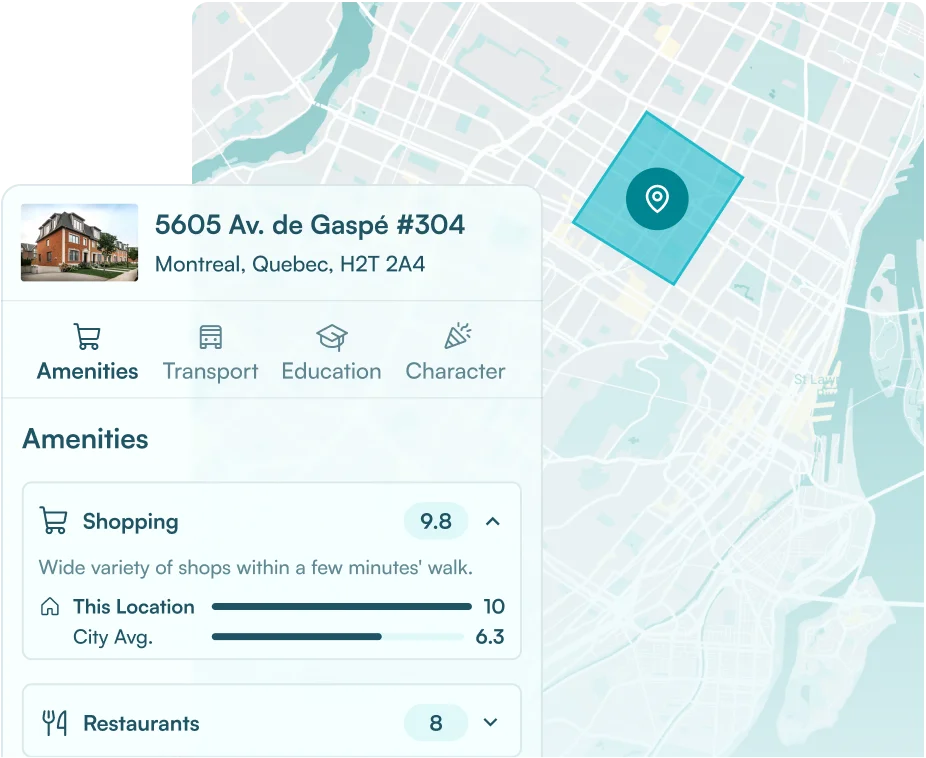
A listing tells consumers what a house looks like. Location intelligence tells them what their life in the area could look like. Those are very different things, and consumers are looking for both. Before scheduling a tour, people try to better understand the neighborhood factors that can impact their lifestyle, such as walkability, vibrancy, schools within reach, or commute to the office.
Real estate websites that provide those answers directly on their own platform with up-to-date and accurate neighborhood insights are positioning themselves as local authorities as consumer trust is still being formed.
Your site is where you can build long-term brand equity. By offering consumers something worth exchanging for, rather than just asking for contact information, you can more easily convert prospects into leads.
For example, by giving consumers instant access to Local Logic’s Location Reports, which include both detailed lifestyle context and market trends, through Lead Capture, our lead magnet tool, your website becomes the source of those insights. That kind of association compounds over time. Consumers share these reports with their partners and families, return to your site as their search evolves, and when they’re finally ready to act, your brand is already the one they trust.
During most of their home journey, consumers are not actively looking. They’re living their life, monitoring the market, and quietly debating where they want to move next.
Generic drip campaigns aren’t the best way to nurture these prospects. Instead, sending them timely, relevant neighborhood insights is what will encourage them to re-engage. By the time they’re ready to make a move, the real estate brand that has been quietly, consistently delivering value is the one that stays top of mind.
The challenge is that most real estate websites aren’t providing consumers with the in-depth neighborhood insights they need to make confident, well-informed decisions about where to live next.
That’s the gap Local Logic’s home consumer engagement solutions, like Local Search, Local Content and NeighborhoodWrap, close. They embed rich, structured location intelligence (e.g., walkability, demographics, points of interest, schools, transit, neighborhood character, and market trends) directly into your listings and community pages to provide in-depth local context, without requiring your team to source, maintain, or normalize location data from multiple vendors.
On top of building an online presence, real estate brands can establish their local expertise in many ways, including:
You need to create an experience worth returning to in order to earn consumers’ trust and become their top choice. Before asking the consumer for anything, always provide value first.
Real estate consumers are already deep into their search before anyone in the industry gets a chance to make an impression. They’ve spent weeks, sometimes months, researching neighborhoods, comparing market conditions, and forming an opinion of which platform they can trust and knows their market best.
Their shortlist is already set, and the trust has already been extended by the time they are ready to reach out. It won’t go to the brand that tried to get their contact information first, but to the one that gave them something valuable before they asked for it.
Real estate companies that can provide local context to consumers will stay top-of-mind and win the relationship when it matters most.
➡️ Book a meeting with Audrey Whittington (EVP Sales and Strategic Partnerships) & Vincent-Charles Hodder (CEO and Co-founder) at T3 Leadership Summit to learn what it takes to be the brand consumers find, trust, and return to throughout their home search journey.