Local Logic and Elm Street Bring Neighborhood Insights to IDX Broker Agent Websites
Partnerships
| 06 Oct 2026
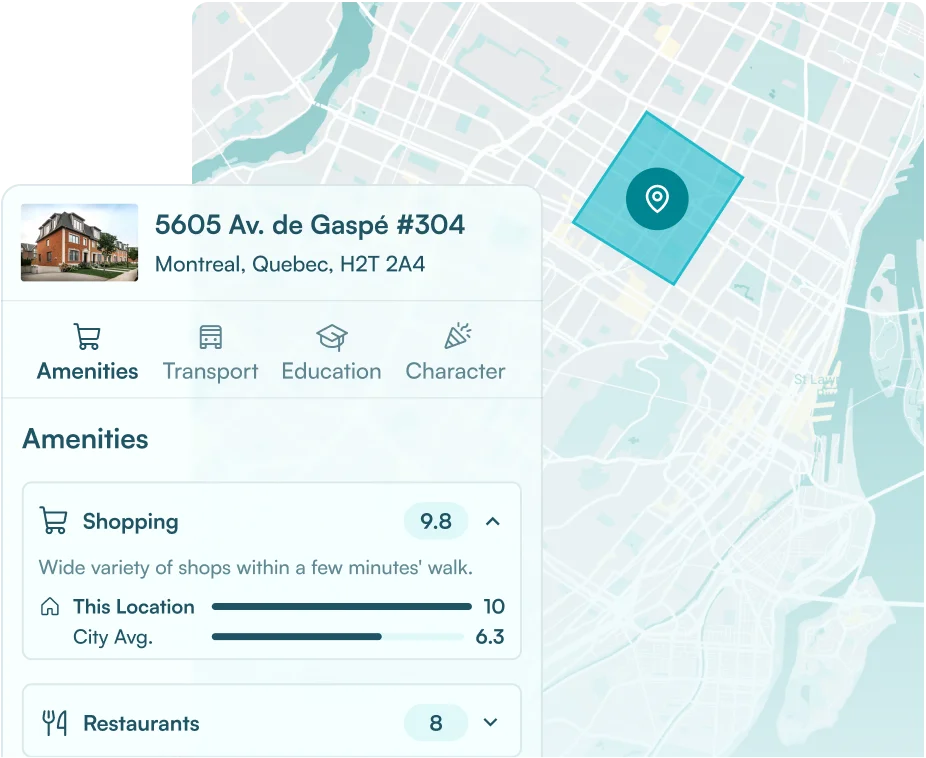
Location intelligence, including walkability scores, school data, points of interest, and demographics, tends to get used at one moment in the agent-client relationship: the listing appointment. It shows up in the deck, impresses the seller, and then largely disappears. But that’s a narrow use of the data. The agents and brokerages getting the most out of location intelligence have figured out that it isn’t just a presentation tool. It’s a relationship tool.
It works before the first meeting, during the pitch, in the follow-up, on the website, inside the drip campaign, and across an entire agent network. Each time, it does something different, something a competitor without that data layer can’t easily replicate.
Here are the five moments where location intelligence can make a difference:
Most listing presentations look the same. They usually feature comparable sales, suggested price, days on market, and a marketing plan. Every agent in the running that week has roughly prepared that very package. Sellers know it. They sit through four appointments, and then they pick an agent, but it’s not always the one with the best CMA.
What separates the agents who walk out with the listing is specificity. They don’t tell a seller that the neighborhood is great; they show exactly why it is. Here’s your walkability score. Here are the three schools serving this catchment and how each has rated over the last two years. Here’s what the market has done for this specific property type over the last 90 days. That depth of preparation is hard to fake, and sellers notice it immediately. It signals that this agent actually knows the area, not just the market in general, but this street, this catchment, this kind of buyer.
Here’s the thing about the listing presentation: it ends. The agent leaves, and then the seller sits down with their partner and compares everyone they met that week. At that point, charm matters less than what’s still in the room.
The agents who win that comparison are the ones who remain present even after they’ve left. A branded neighborhood report that covers both lifestyle context and market conditions, sent within 24 hours of the appointment, becomes the reference point for that conversation. It gets reviewed that night, shared with family, and pulled up again on the morning of the decision. It’s concrete evidence of how that agent thinks and what working with them would look like. No follow-up call replicates that. A phone check-in is forgettable; a well-prepared document with real data is not.
Buyers spend weeks, sometimes months, researching online before they contact anyone. According to NAR’s 2026 NAR Generational Trends Report Insights, 34% cited neighborhood information as one of the most valued features on a real estate website. Buyers have moved past filtering by beds and baths. They want to understand what it actually feels like to live in a given area: the walkability, the schools, the pace of the market, the character of the streets.
Brokerages that can answer that question directly on their website keep buyers engaged longer and reduce the chances they bounce to a portal to find what they’re looking for. Royal LePage saw exactly that dynamic play out: by adding structured lifestyle context to their listings, they increased their lead pipeline by 43%, driven by buyers who found the information they needed without leaving the site.
Most market update emails get ignored, and for good reason. A buyer who is six months out from making a decision doesn’t want a national market snapshot. They want to know what’s happening in the specific area they’ve been thinking about. Generic content doesn’t answer that question, so it gets ignored or deleted.
Neighborhood-specific content changes that equation. It gives buyers a reason to actually read the email because it’s about something they already care about. The intake process is what makes it sustainable at scale. Local Logic’s Lead Capture works as a contact form on a listing or community page, offering a Neighborhood Report in exchange for contact details. When a buyer fills it out, the agent knows exactly which area that person is interested in, and every email that follows can be built around that signal, rather than defaulting to another generic update.
Top producers at most brokerages have already built their own workflows around neighborhood data. They know what works. The question for brokerage leaders isn’t whether that approach is effective; it’s whether it stays concentrated in the top 20% or becomes available to every agent on the roster, at the same level of quality, without asking each person to figure it out independently.
FirstTeam Real Estate answered that question by deploying Location Reports across their full agent base. Every agent, not just the top producers, could walk into a listing appointment or send a client follow-up backed by the same quality of neighborhood intelligence. That kind of consistency shapes how a brokerage is perceived from the outside. It compounds over time, and it’s not easy to reverse-engineer once a competitor has built it into how they operate.
These five moments follow the same principle. The agents and brokerages that build relationships on specificity, by actually knowing the neighborhood, the market, and the lifestyle context a home consumer cares about, consistently outperform the ones who don’t.
Location intelligence makes that specificity accessible. Not just at the listing appointment, but at every point in the relationship where trust is either built or missed. The leave-behinds that get shared the next morning. The website that keeps a buyer engaged instead of handing them over to a portal. The drip email that gets read because it’s about something they actually care about. The brokerage that gives every agent on their roster the same tools the top 20% have always had.
None of these are complicated ideas. But they require data that’s accurate, current, and structured in a way that makes it usable at each of these moments, not just one of them.
➡️ Book a meeting with Casey Brennan (Growth Manager) and Max Leblond (VP Marketing) at Realtor Quest 2026 to see how Local Logic delivers neighborhood intelligence across every stage of the agent-client relationship.