
Conference
NAR NXT, The REALTOR® Experience 2026
November 6, 2026 - November 8, 2026
New Orleans, LA
The HousingWire AI Summit‘s premise is simple: AI execution beats AI hype. We agree. And execution in real estate, mortgage, and title runs on one thing most AI still lacks: accurate, structured data about the places people actually live. That is what we at Local Logic are building, and we are bringing it to Dallas.
August 11, 2026
Dallas, TX
HousingWire
AI in real estate is only as good as the data it’s built on. A model can write a listing description or answer a buyer’s question, but if it does not know that a home is within a few minutes’ walk of groceries, near a large amount of park space, or a short drive from the nearest freeway, it is guessing about the thing that matters most to the person making the decision.
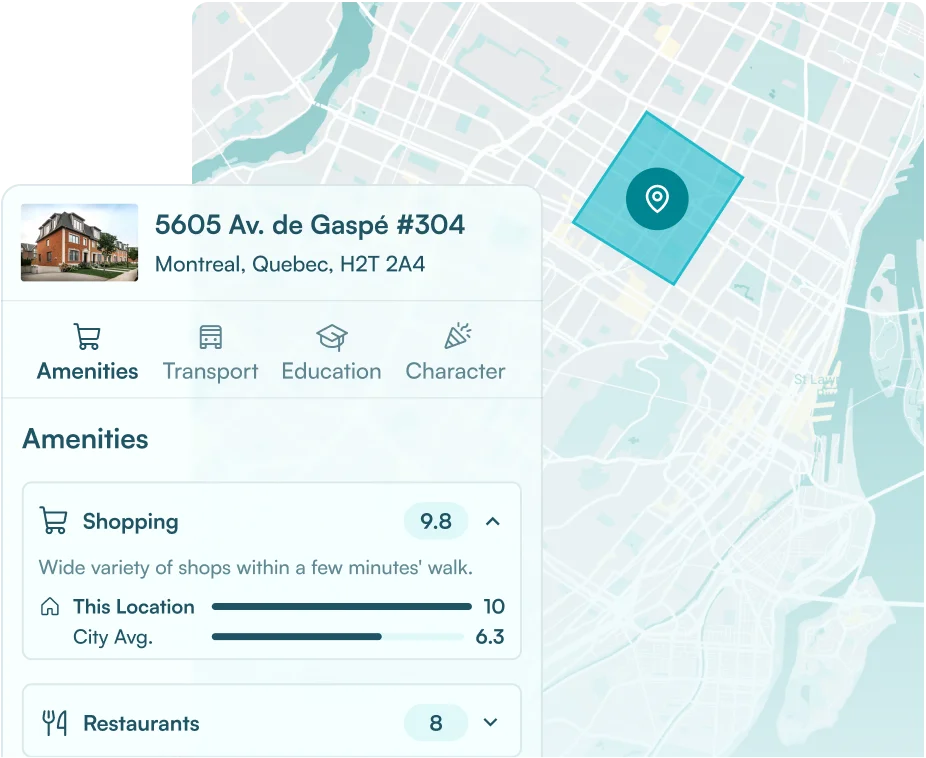
Location is the most consequential and least-structured factor in a home decision. Local Logic quantifies everything outside the four walls: location intelligence that turns walkability, amenities, schools, demographics, and the built environment into clean, machine-readable data. It is the ground truth an AI system needs before it can be trusted with a buyer, a borrower, or a transaction.
That is the gap between AI hype and AI execution, and it is exactly what we will be talking about in Dallas.
The best way to understand structured location intelligence is to point it at the city the summit is in. Every number below comes straight from the Local Logic platform for Dallas, TX; the same data our customers feed into websites, search tools, and AI products.
| Dimension | Score | What it means |
|---|---|---|
| Car-friendly | 7.9 | Good freeway access with a low chance of parking problems |
| Parks | 7.7 | Large amount of park space nearby |
| Groceries | 7.4 | Wide variety of groceries within a short drive, some within walking distance |
| Restaurants | 7.0 | Wide variety of restaurants within a short drive, some within walking distance |
| Quiet | 6.7 | Few sources of noise nearby |
| Pedestrian-friendly | 5.8 | Some day-to-day needs are within walking distance |
| Transit-friendly | 3.4 | Transit is available for some trips |
The summit’s own neighborhood: the George W. Bush Presidential Center sits near SMU, and the location data reflects a far more walkable pocket than the city average: restaurants score 8.7, groceries 8.3, and cafés 8.2, a wide variety of each within a few minutes’ walk. When you step out for lunch between sessions, that is the data working in real life.
Where Dallas is most walkable, neighborhoods ranked by pedestrian-friendly score:
Where Dallas eats, neighborhoods ranked by restaurant access:
The market behind the map, demographics for the city of Dallas:
Read together, the scores, the neighborhood profiles, and the demographics tell a coherent story a model can reason over: Dallas is a car-oriented, park-rich, renter-heavy market where walkability concentrates in a handful of central neighborhoods. That is the kind of grounded context that separates an AI answer you can act on from one you have to double-check.
We will be talking through how teams put this data to work — not as a demo for its own sake, but as the input layer that makes AI execution possible. A few of the capabilities on hand:
If you build for mortgage and lending teams, brokerages, portals, or title, this is the data layer that lets your AI speak credibly about the one factor buyers care about most.
If you are coming to the HousingWire AI Summit, come find us. Bring the AI use case you are trying to bring to market, and we will talk through the location data that gets it there.
It is a one-day event hosted by HousingWire that brings together executives and technology professionals across mortgage, real estate, and title to focus on the practical impact of AI. The agenda centers on real action plans, clear use cases, and execution strategies rather than speculation.
The summit takes place at the George W. Bush Presidential Center, 2943 SMU Boulevard, Dallas, TX 75205, on August 11, 2026. Registration and ticket details are available on the official event page.
AI in real estate, mortgage, and title only performs as well as the data behind it, and location is the hardest factor to structure well. Local Logic builds that location intelligence, so the summit’s focus on AI execution over hype is exactly where our work fits.
Local Logic offers Location Scores across 18 dimensions, demographics, narrative neighborhood profiles, and points of interest for any address in the US and Canada. The data is available through products and as an API for teams building their own AI and search experiences.
Structured location data gives an AI system ground truth about walkability, amenities, schools, and the built environment — the factors that drive a home decision. With that context, AI can answer buyer and borrower questions accurately instead of guessing, which is the difference between a demo and a tool people trust.
Find us at the event in Dallas, or book a demo ahead of time so we can have the conversation ready when you arrive.